





About this Stay
I stayed for one night at Hotel Baishokaku, located halfway up Mount Kompira, which rises on the eastern side of Nagasaki Port.
- Highlights of this hotel:
- ① Because the hotel is located halfway up the mountain, guests can enjoy panoramic views of Nagasaki City, Nagasaki Port, and Nagasaki’s famous nightscape, known as one of the world’s three great night views, directly from their rooms.
- ② Guests can enjoy Nagasaki-style cuisine made with local ingredients, including Shippoku cuisine and traditional kaiseki meals. The breakfast buffet is also extensive, offering more than 60 different dishes.
【Baishokaku】
One of three hotels in Nagasaki City operated under the HMI Group, which is headquartered in Tokyo. The three hotels — Nisshokan, Baishokaku, and Koyotei — are all located halfway up Mount Kompira and offer sweeping views of Nagasaki City and Nagasaki Port.
Table of Contents
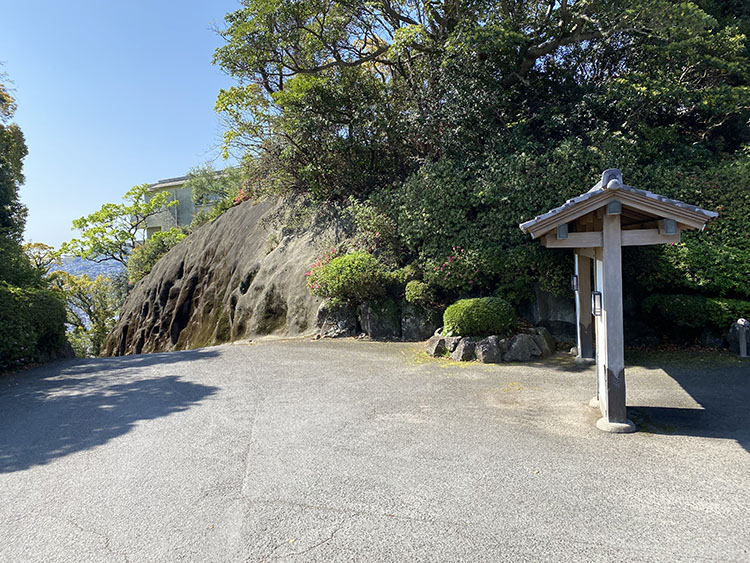
Getting to the Hotel
Top
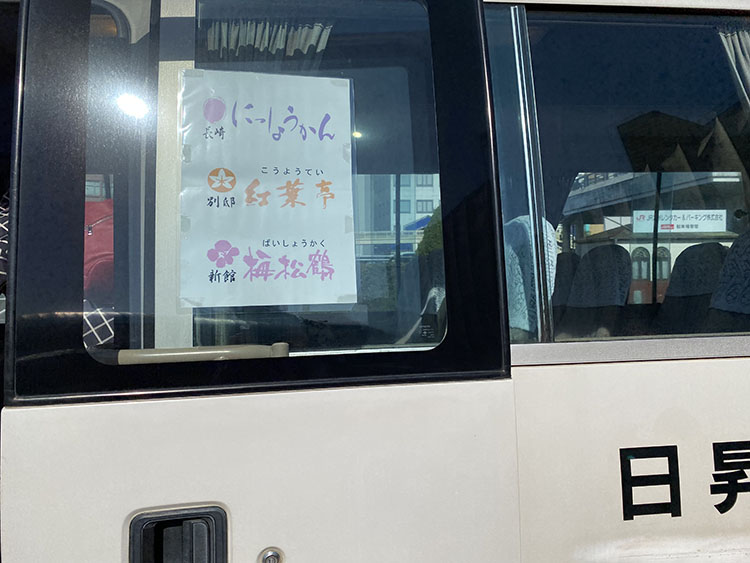
Shuttle Bus from Nagasaki Station
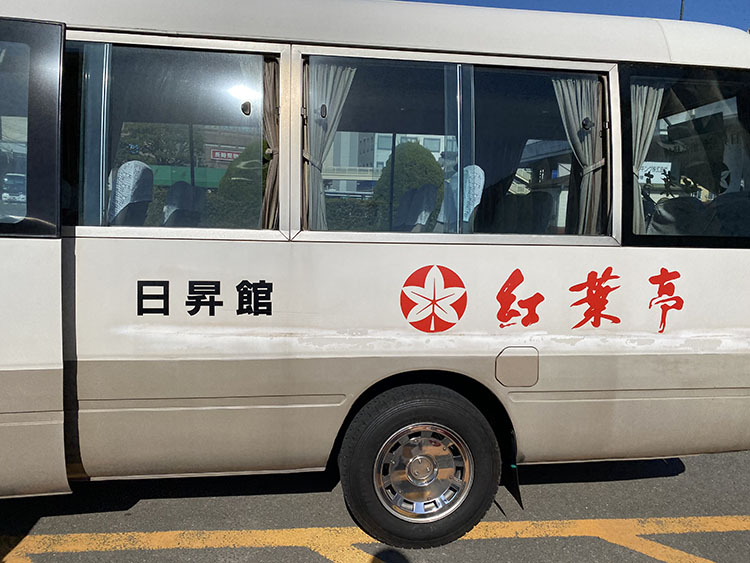
A complimentary shuttle bus service is available from Nagasaki Station.
You can also see the logos of the neighboring hotels operated by the same HMI Group: Nisshokan and Nisshokan Bekkan Koyotei.
Lobby
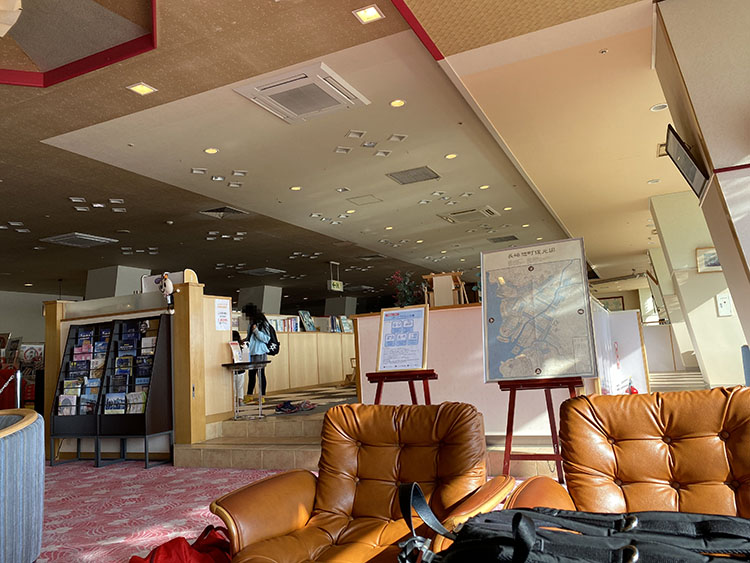
We arrived at Baishokaku. This is the lobby.
Beyond the sofas, there is a map of Nagasaki from the Edo period displayed on the wall.
Guest Room
Top
Guest Room
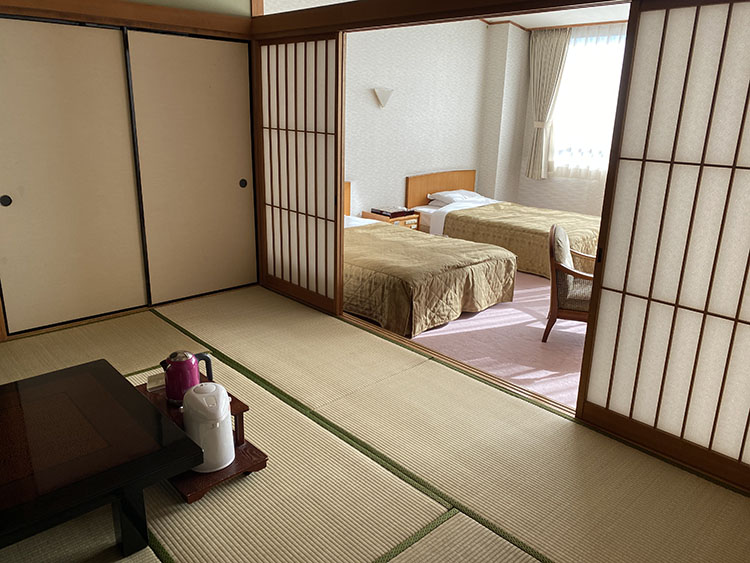
This is the guest room.
It features a spacious Japanese-style room together with Western-style beds.
Tokonoma Alcove and Table
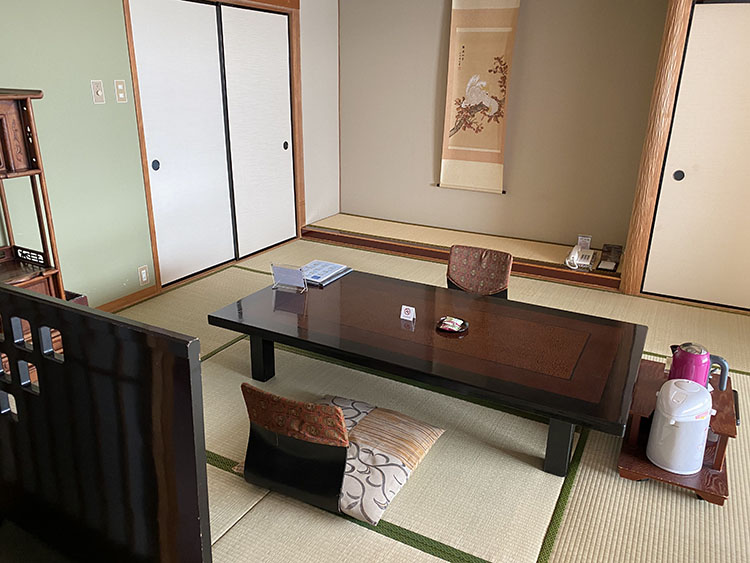
This is the tokonoma alcove and table in the Japanese-style room.
Decorative Shelves
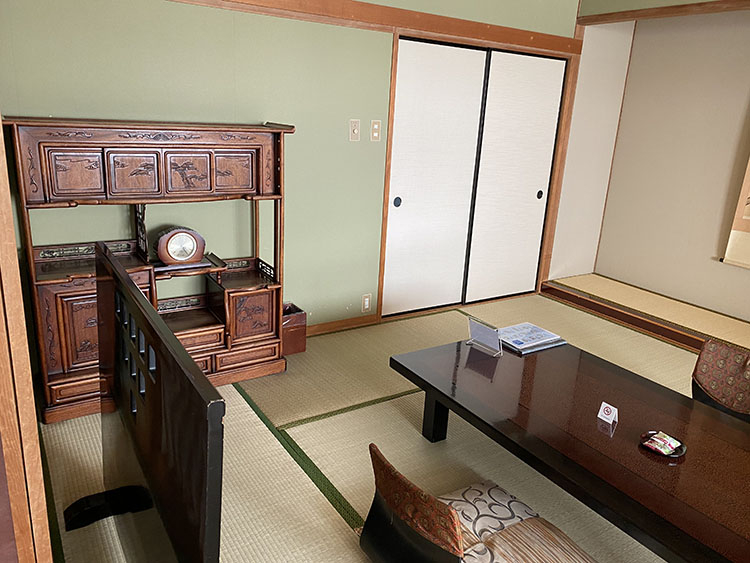
These elegant decorative shelves feature a traditional staggered-shelf design.
Bedroom Area
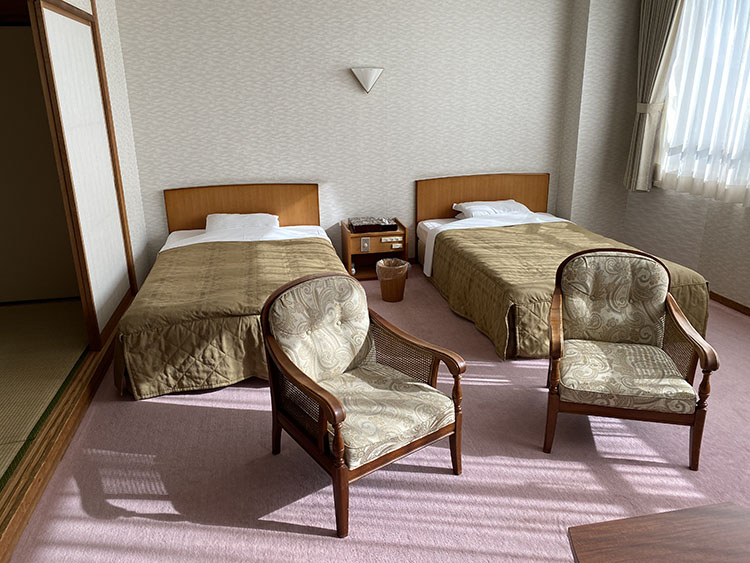
These are the beds. In the foreground, there are also comfortable chairs and a table where guests can relax.
View from the Room
Top
Nagasaki City and Nagasaki Port
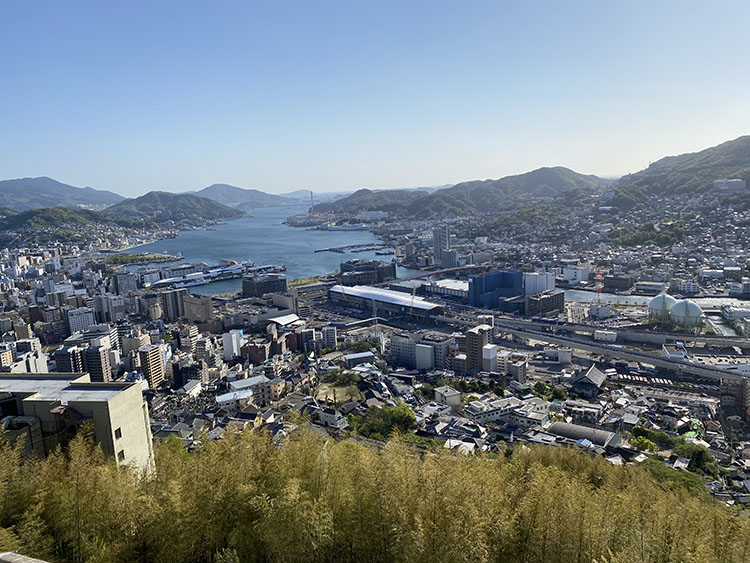
Baishokaku is located halfway up the mountain, and from the room windows you can enjoy a panoramic view of Nagasaki City and Nagasaki Port.
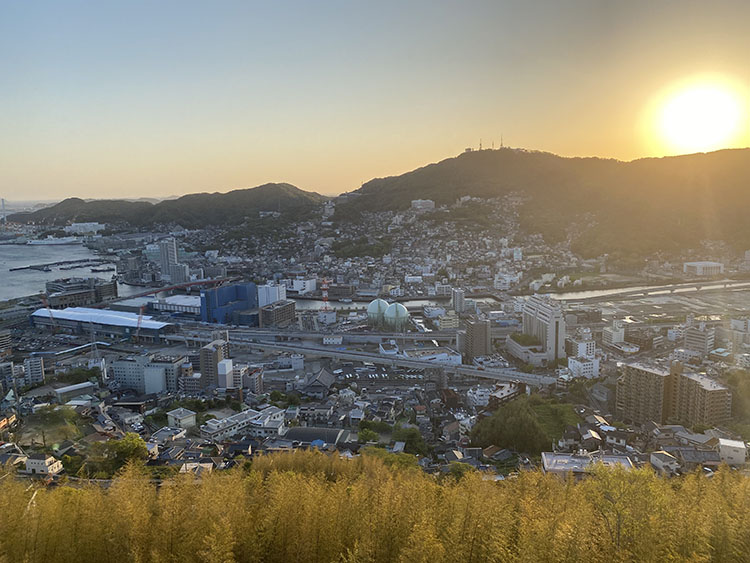
Before Sunset
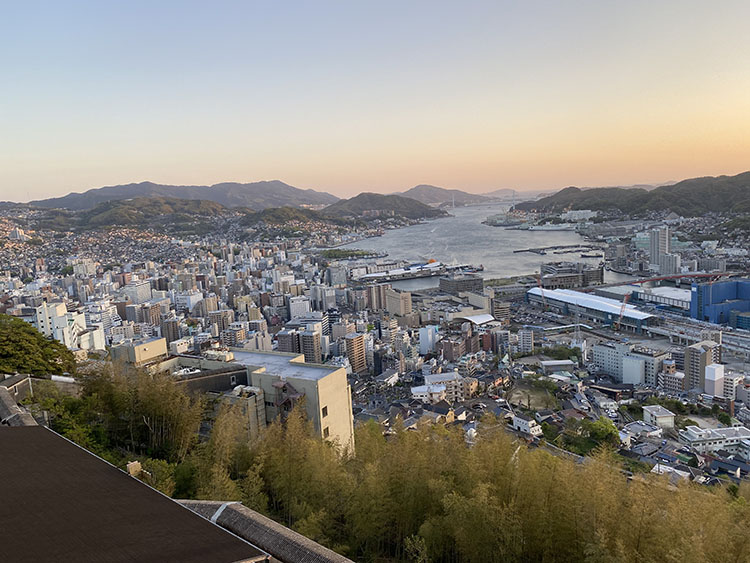
It was getting close to sunset.
Sunset
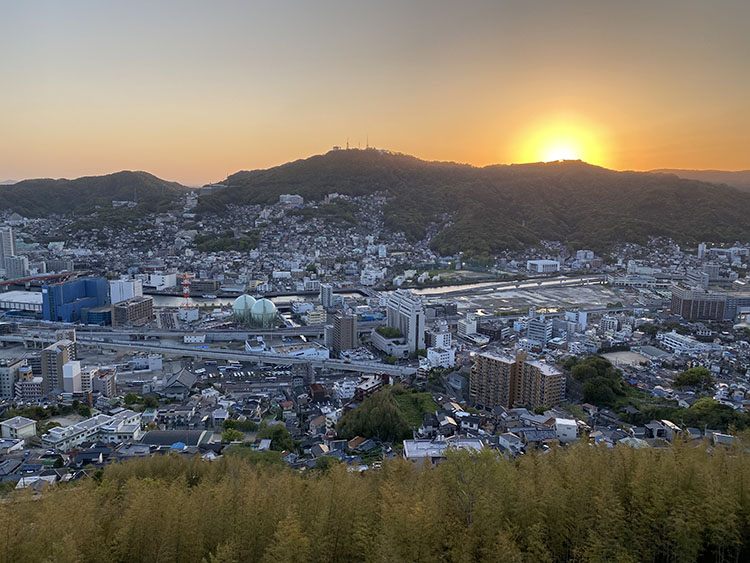
Just before the sun disappeared below the horizon.
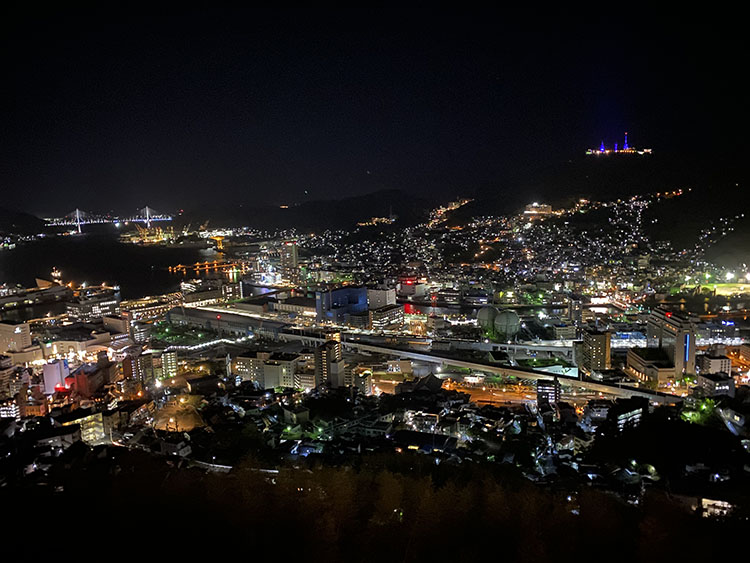
Night View of Nagasaki (1)
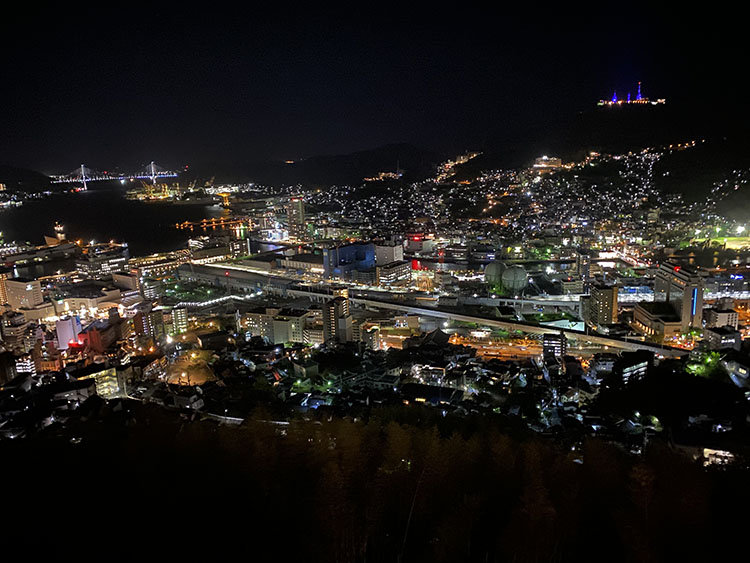
This is the night view of Nagasaki seen from the room window after dinner.
The bridge in the distance on the left is the “Megami Bridge” spanning the entrance to Nagasaki Port, while the mountain with illuminated antennas on the summit to the right is Mount Inasa.
The lights of the houses climbing the bowl-shaped slopes together with the illuminated buildings below create a truly mesmerizing scene.
Nagasaki’s night view is regarded as one of the world’s three great night views, alongside Monaco and Shanghai.
Night View of Nagasaki (2)
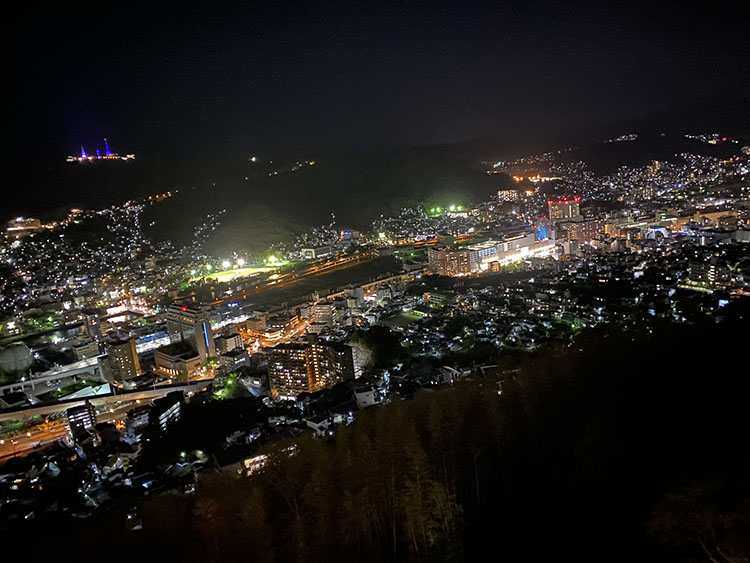
This is the night view from the room facing the opposite side from Nagasaki Port.
It looks like a nighttime baseball game was being played at the stadium. The lights from the houses on both the left and distant right hillsides were especially impressive.
Morning in Nagasaki
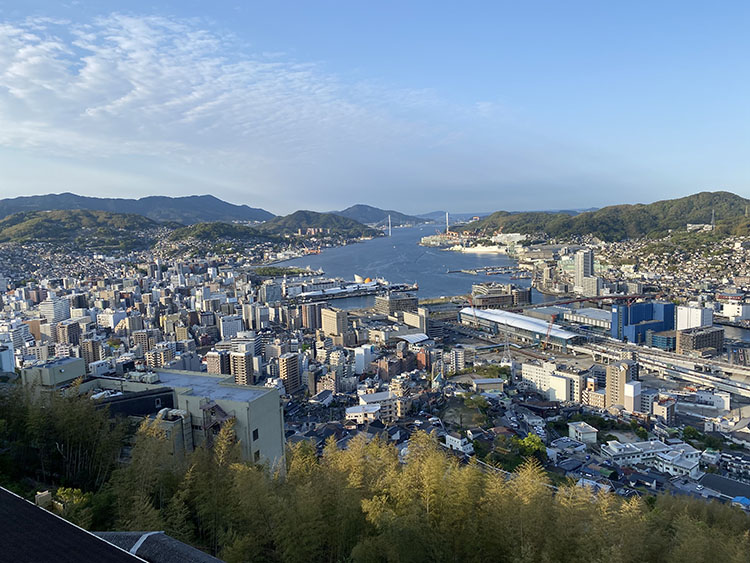
When I woke up in the morning, the view of Nagasaki was incredibly clear.
Thinking about how Western ships began arriving through the entrance of Nagasaki Port, where the Megami Bridge now stands, from the 16th century onward, and how modern civilization from around the world entered Japan through this city, filled me with deep emotion.
Dinner
Top
A Table Full of Dishes
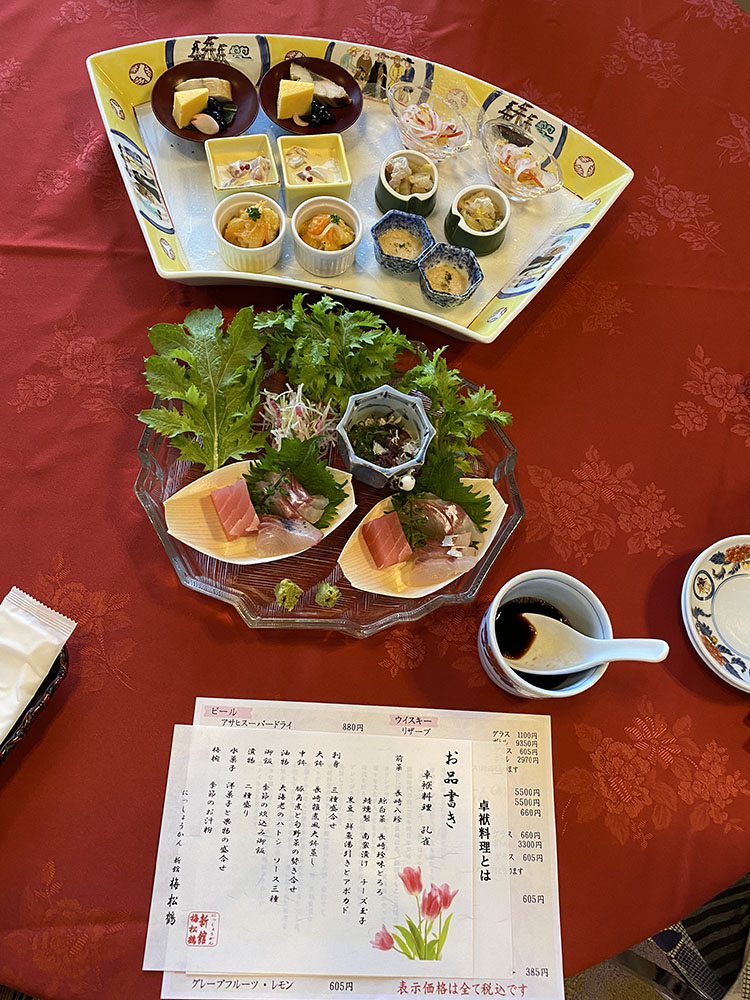
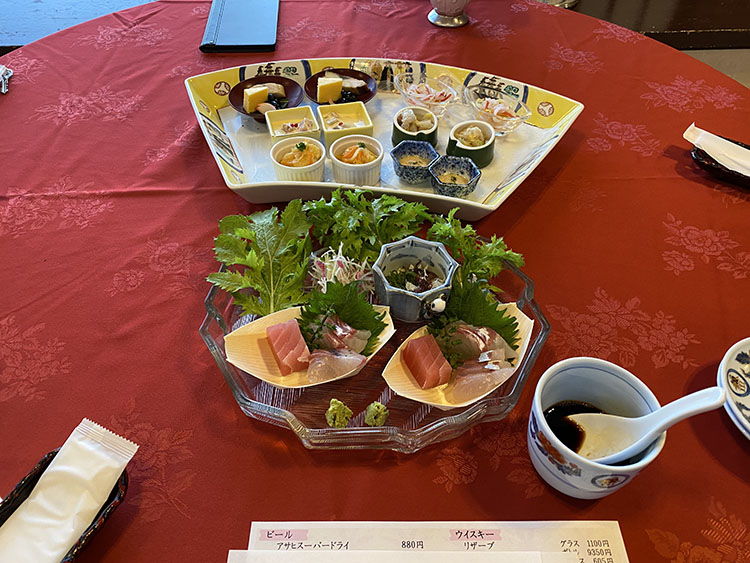
This was a course meal featuring Nagasaki’s traditional “Shippoku cuisine,” and these dishes were the appetizers and sashimi course.
Although the meal was for two people, each item was carefully portioned into small servings, making it easy to share and enjoy.
Appetizers
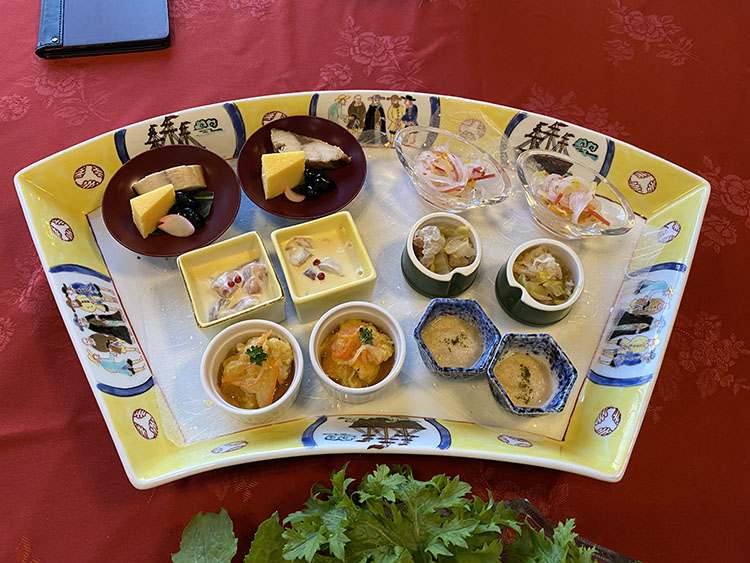
The appetizers were served in small bowls arranged on a large platter shaped like Dejima.
- ・ (Glass dish) Parboiled fresh fish, perhaps sea bream
- ・ (Bamboo cup) Whale meat and Chinese cabbage
- ・ (Hexagonal bowl) Grated yam
- ・ (White round bowl) Nanban-style marinated dish
- ・ (Yellow square bowl) Possibly sautéed fish in cream sauce
- ・ (Black round plate) Black beans, cheese-flavored omelet, and smoked mackerel
Sashimi
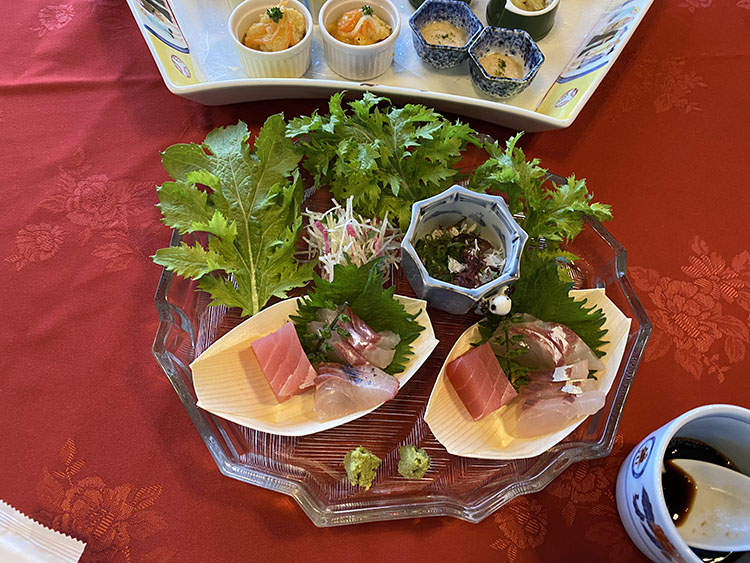
This was an assortment of three kinds of sashimi: probably tuna, horse mackerel, and yellowtail.
The octagonal bowl containing condiments such as chopped green onions and ogonori seaweed (a red seaweed) was decorated with small Chinese-style child figures peeking over the rim.
Explanation of Shippoku Cuisine
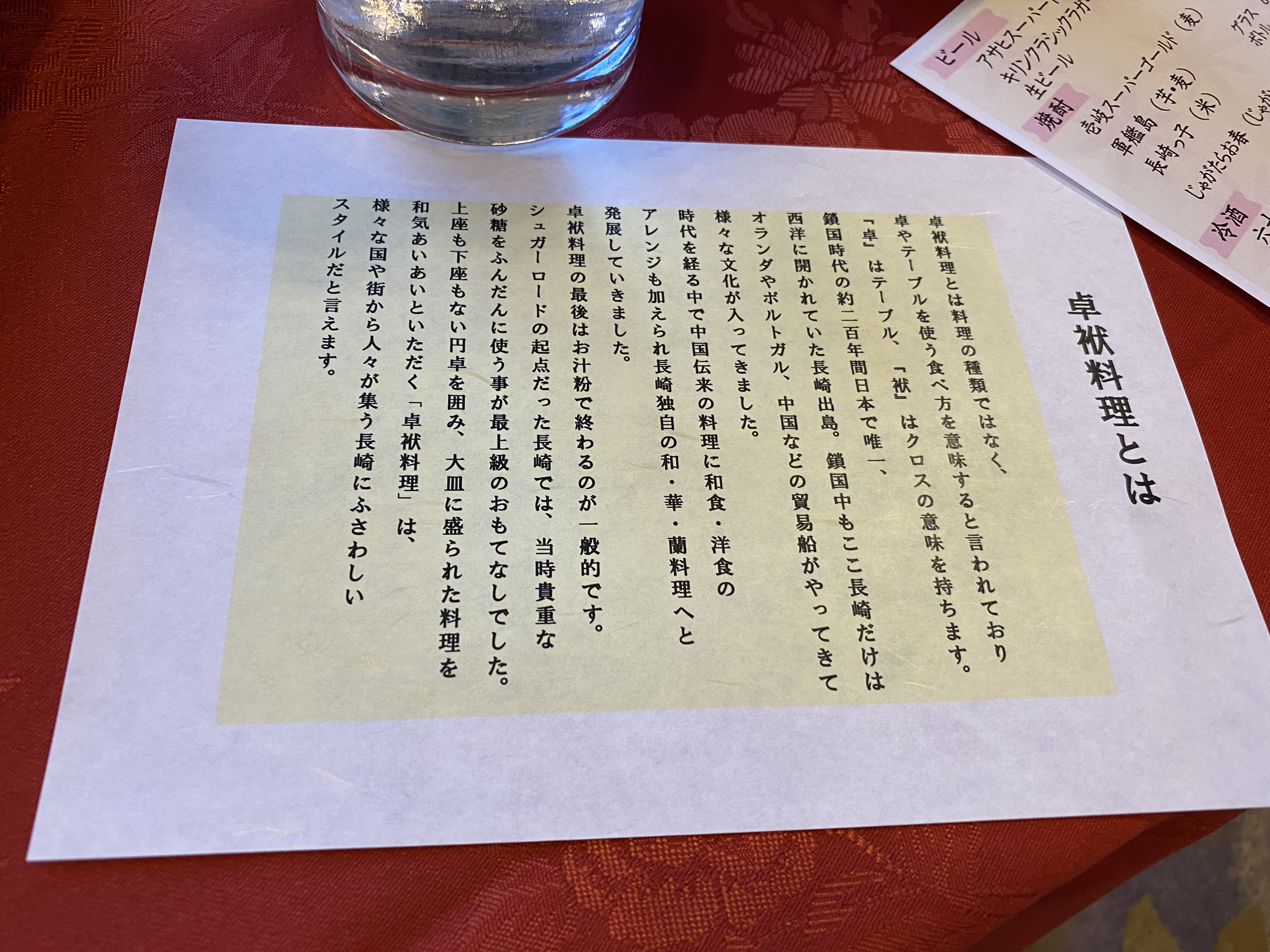
This was an explanation of Shippoku cuisine.
During Japan’s isolation period, Nagasaki was the country’s only gateway for exchange with the West, welcoming Dutch, Portuguese, Chinese, and other trading ships. Shippoku cuisine is said to have developed there through the fusion of Japanese, Western, and Chinese culinary traditions.
Menu
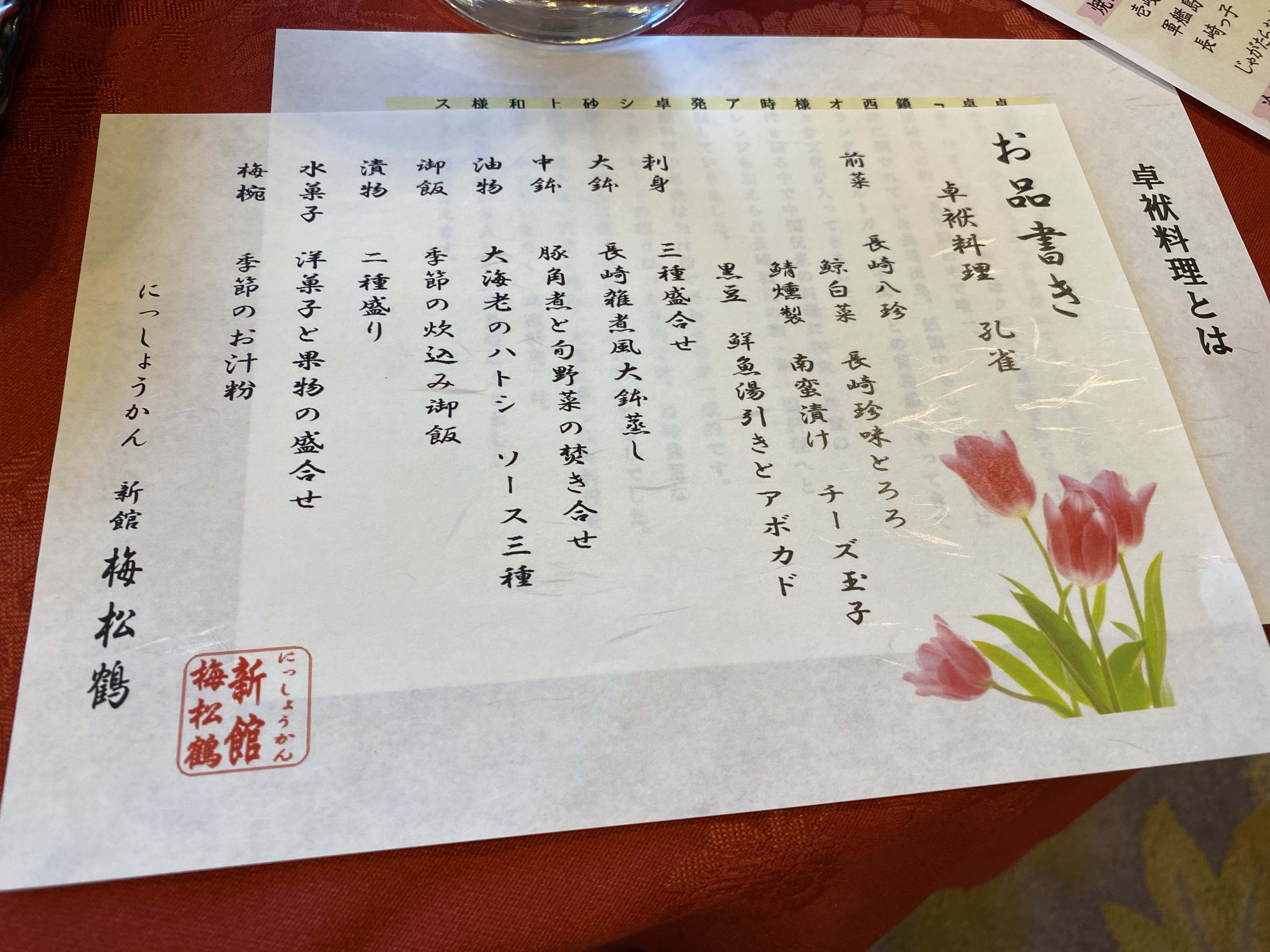
This was the menu for the day’s Shippoku cuisine course.
Ozoni-style Steamed Soup and Braised Pork Belly
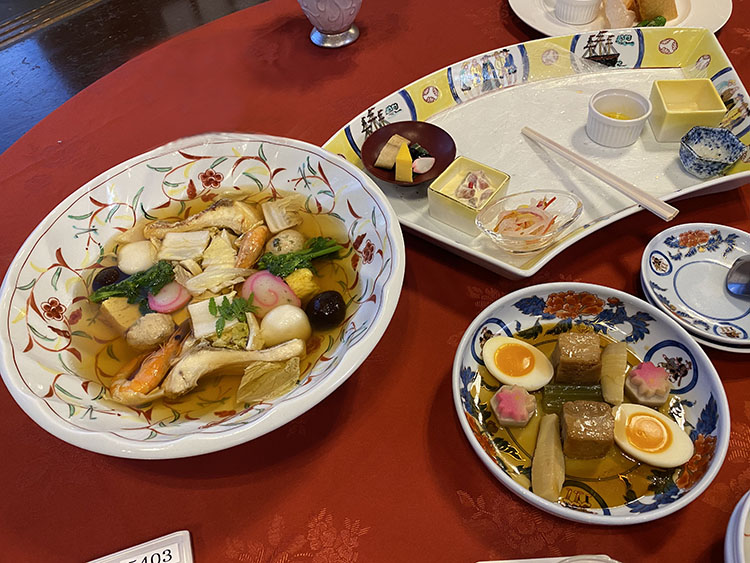
This was a Nagasaki-style ozoni soup along with braised pork belly.
Ozoni-style Steamed Soup
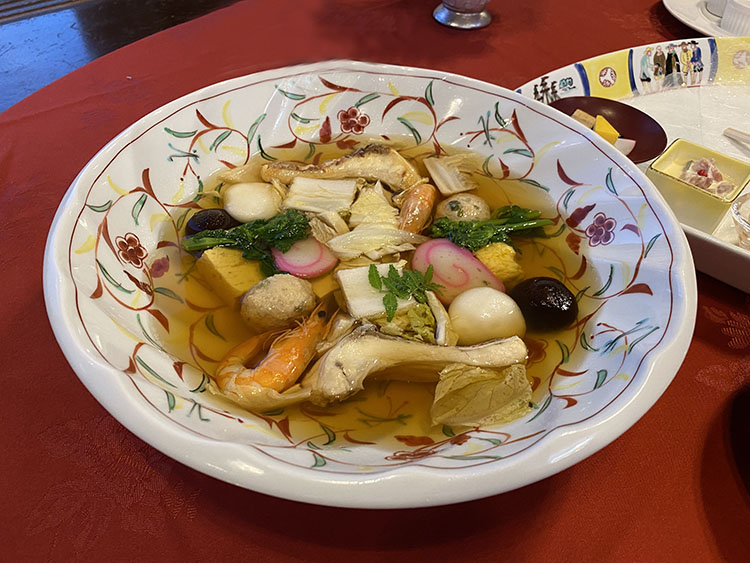
Nagasaki-style ozoni, often served during New Year celebrations and other festive occasions, contains a wide variety of ingredients.
Inside were shrimp, yellowtail, narutomaki fish cake, yuba, Chinese cabbage, katsuo-na greens, shiitake mushrooms, and two small rice cakes.
Braised Pork Belly and Seasonal Vegetables
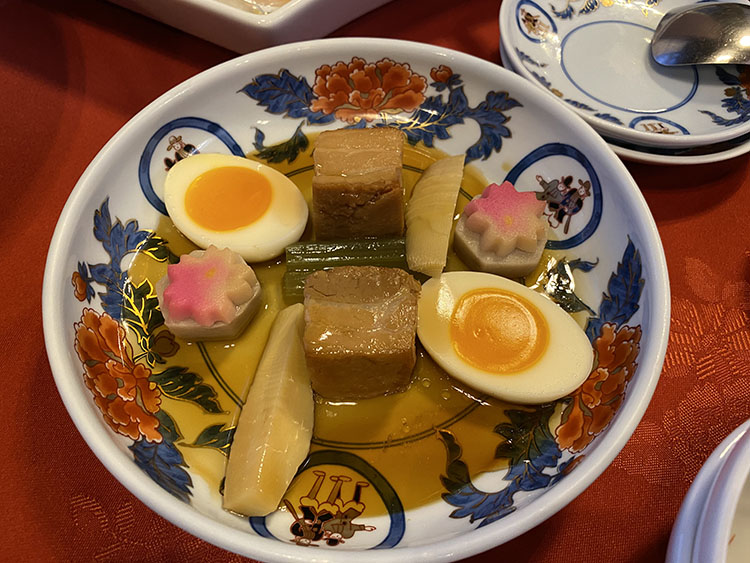
This dish featured braised pork belly and seasonal vegetables.
The vegetables included bamboo shoots, taro, and some kind of leafy greens. The seasoned soft-boiled egg was also delicious.
Hatoshi
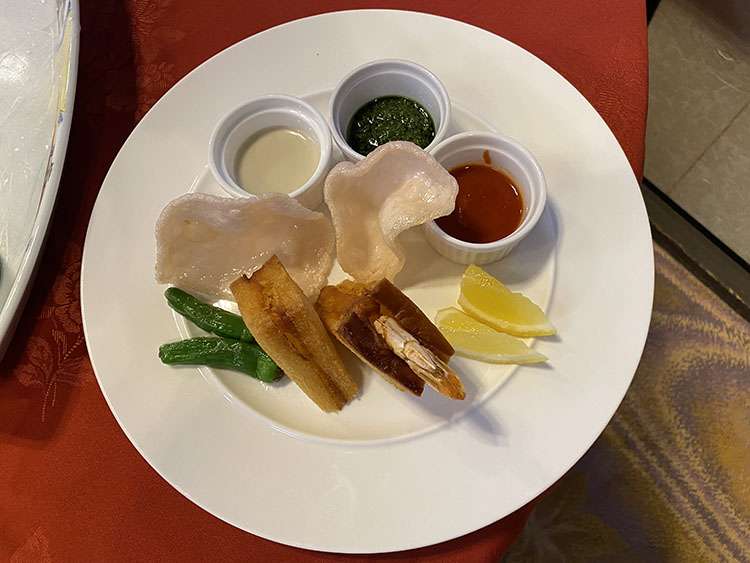
This is the famous Nagasaki dish called Hatoshi.
It originated from the Chinese dish “ha duosi.” “Ha” means shrimp, and “duosi” refers to toast. It is made by sandwiching shrimp paste between slices of bread and deep-frying them.
Desserts and Pickles
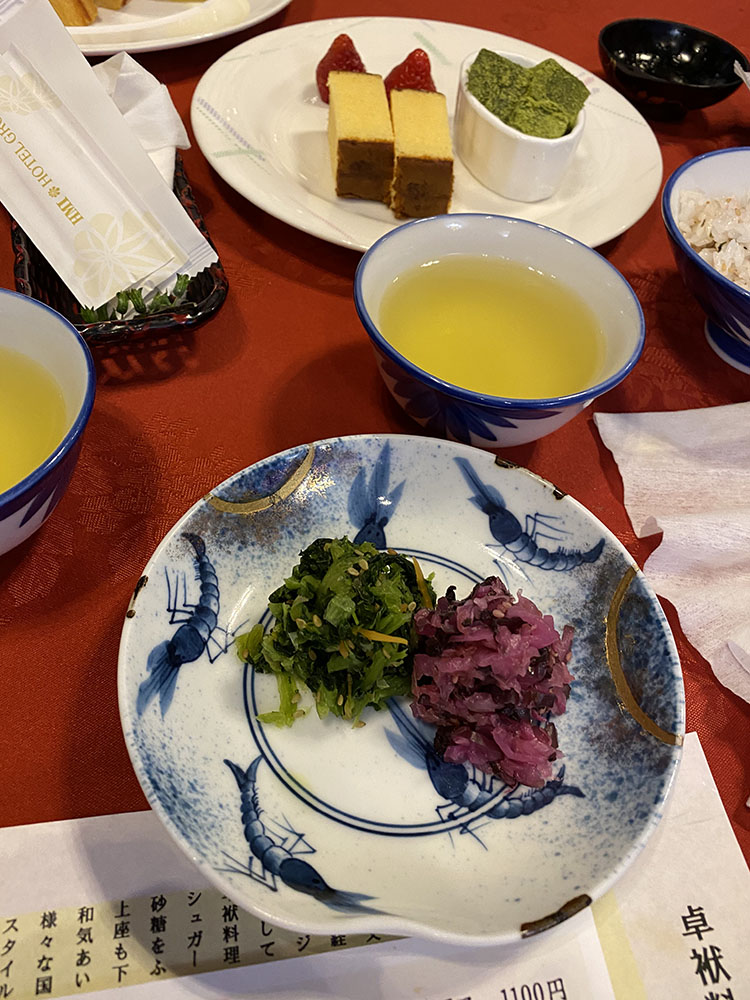
Pickles and desserts.
- ・ Japanese pickles
- ・ Castella cake, strawberries, and matcha warabi mochi
Breakfast
Top
Buffet Counter
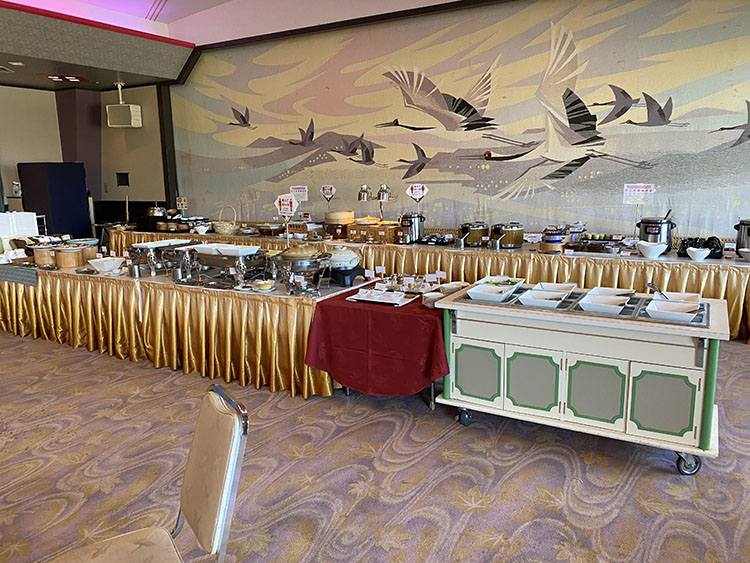
This is the buffet counter at the breakfast venue.
There were more than 60 different dishes available, which was truly impressive. (Information from the Baishokaku official website.)
- ・ Eight kinds of seasonal vegetables
- ・ Western dishes: scrambled eggs, sausages, minced meat cutlets, croquettes, etc.
- ・ Nagasaki and Kyushu specialties: kankoro mochi, Goto udon, Chikuzen-ni, chicken nanban, etc.
- ・ Japanese dishes: salted salmon, salted mackerel, omelet, nikujaga, mentaiko, spicy takana mustard greens, grated yam, etc.
- ・ Rice, soups, and broths: white rice, barley rice, clam soup, flying fish stock miso soup, soup, etc.
- ・ Bread: croissants, butter rolls, sliced bread, Danish pastries, wheat germ bread, etc.
- ・ Fruit and yogurt
- ・ Drinks: juices (orange, tomato), milk, coffee, tea, Japanese tea, etc.
Bread Corner
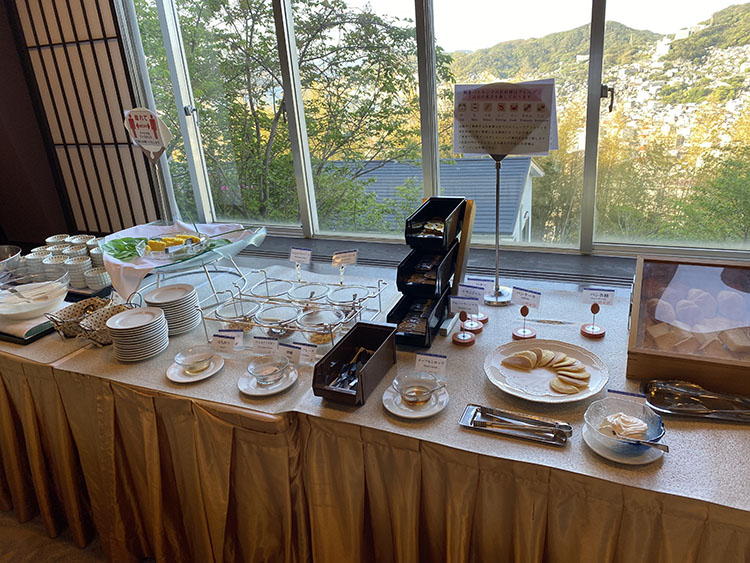
Various kinds of bread and pancakes were displayed along with a wide selection of jams and sauces.
- ・ Butter and maple syrup
- ・ Jams (strawberry and blueberry)
- ・ Sauces (strawberry and blueberry), honey, and chocolate crispy topping
The Dishes I Chose
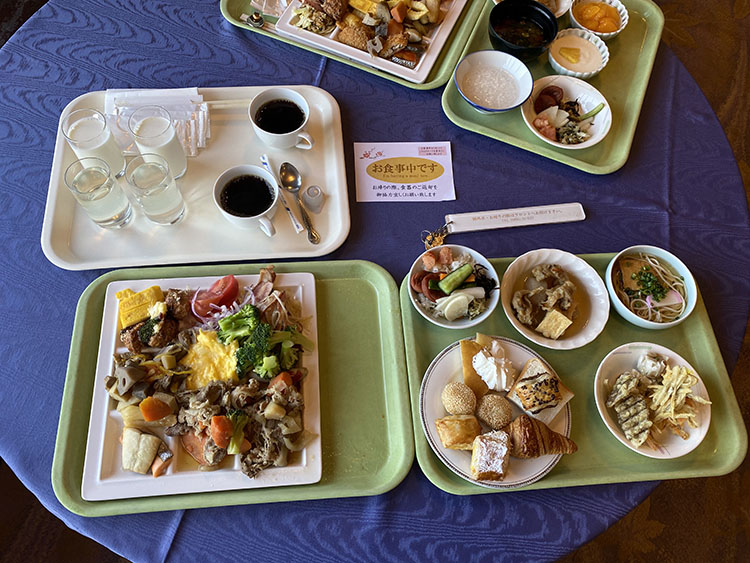
This was the generous selection of dishes I picked from the buffet. Some of them were unique Nagasaki specialties.
- ・ Goto udon = thin udon noodles coated with camellia oil
- ・ (Center of the bread plate) Chinese sesame balls
- ・ (Plate next to the bread plate) Nagasaki-style tempura = the batter itself is seasoned, so it tastes delicious even without dipping sauce.
After Leaving the Hotel
Top
In Front of the Main Entrance
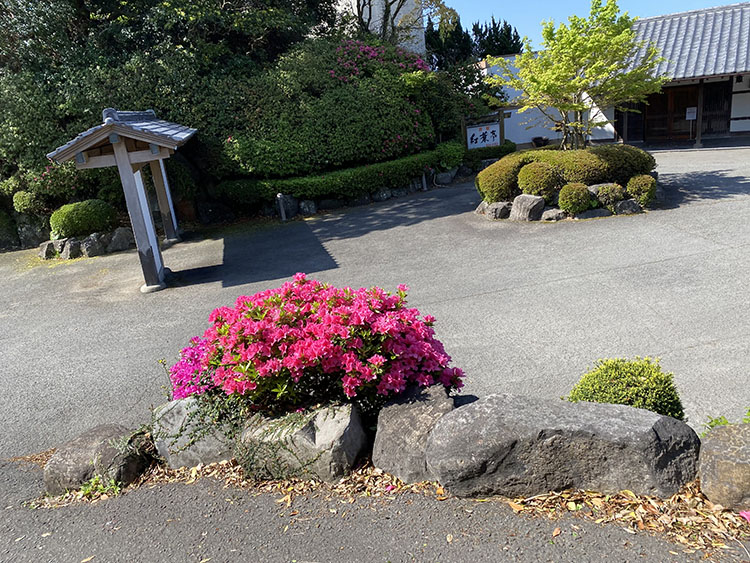
We checked out of Baishokaku. This is the view in front of the main entrance.
On the Way Back
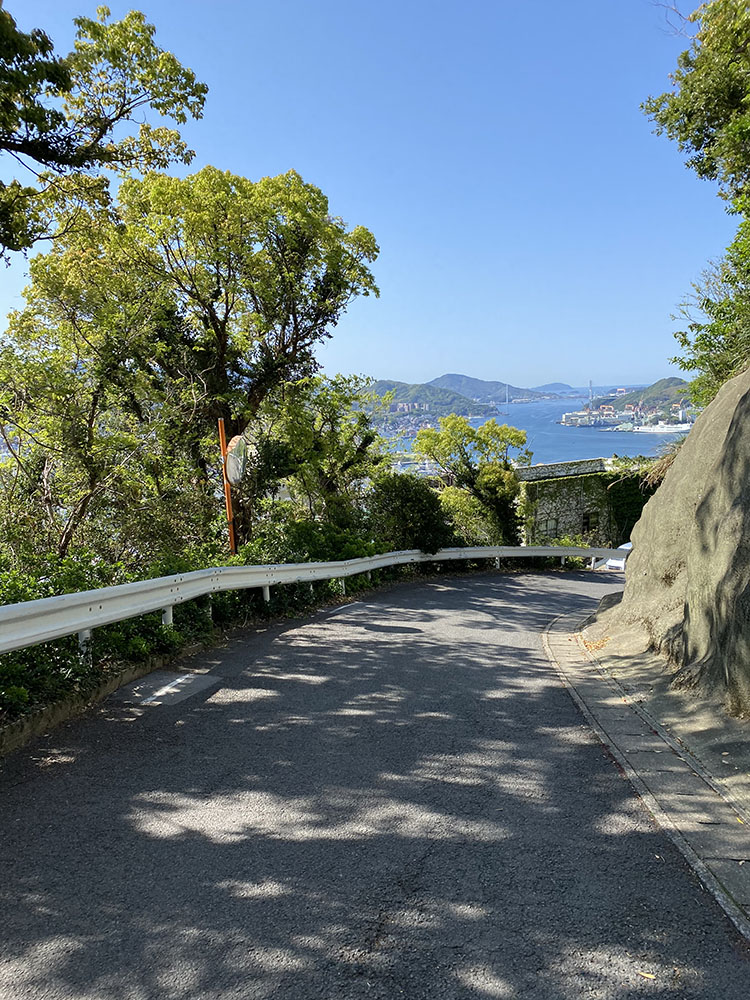
We left Baishokaku behind. Although the hotel is located halfway up the mountain, we walked down the hill from there.
Getting There (For Reference)
Top
SEARCH
Join Real Blue's Newsletter
The latest news from this site is delivered.
Top PostsMore
-
TAP Air Portugal
Lisbon to Porto, Economy Class Flight Report
-

ANA, All Nippon Airways
In-Flight Meal & Cabin Tour Event — Restaurant FLYING HONU, Business Class Experience Report
-

ANA, All Nippon Airways
Narita to Singapore, First Class Flight Report
-

Thai Airways
Bangkok - Kathmandu, Economy Class Flight Report
-
EVA Airways
Taipei - Paris, Business Class Flight Report
-

Emirates
Cairo - Dubai, First Class Flight Report
-

JAL, Japan Airlines
Brussels - London - Haneda, Premium Economy Class Flight Report
-
Garden Terrace Saga Hotels & Resorts
Stay Report
-
Malaysia Airlines
Ho Chi Minh - Kuala Lumpur – Hong Kong, Economy Class
-

ANA, All Nippon Airways
In-Flight Meal & Cabin Tour Event — Restaurant FLYING HONU, First Class Experience Report
-
Hotel Nikko Huis Ten Bosch
Stay Report
-

Qatar Airways
Doha - Incheon (South Korea), Business Class Flight Report
-
Thai Airways
Bangkok - Kathmandu, Economy Class Flight Report
-

ANA, All Nippon Airways
London to Haneda, First Class Flight Report
-
TAP Air Portugal
Lisbon to Porto, Economy Class Flight Report
-
Emirates
Cairo - Dubai, First Class Flight Report
-

Emirates
Dubai - Tokyo Narita, First Class Flight Report
-

JAL, Japan Airlines
Moscow – Narita, Economy Class Flight Report
-
ANA, All Nippon Airways
In-Flight Meal & Cabin Tour Event — Restaurant FLYING HONU, Business Class Experience Report
-

United Airlines
Honolulu to San Francisco, First Class Flight Report
-
ANA, All Nippon Airways
JFK to Haneda, Business Class Flight Report
-

ANA, All Nippon Airways
Boeing 787-10’s Japan Domestic First Flight, Tokyo Haneda - Sapporo New Chitose, Premium Class
-

ANA, All Nippon Airways
Tokyo Narita- New York JFK, Business Class Flight Report
-
Emirates
Cairo - Dubai, First Class Flight Report
-
Qatar Airways
Doha - Incheon (South Korea), Business Class Flight Report
-
TAP Air Portugal
Lisbon to Porto, Economy Class Flight Report
-

JAL, Japan Airlines
Boeing 787-8’s Japan Domestic First Flight, Tokyo Haneda - Osaka Itami, Economy Class
-
United Airlines
Honolulu to San Francisco, First Class Flight Report
-
Hotel Nikko Huis Ten Bosch
Stay Report
-

ANA, All Nippon Airways
Commemorative First Flight of A380 Aircraft No. 3, Narita - Honolulu, Business Class Flight Report