

About this Stay
I stayed at Okutsu Onsen Okutsuso, a traditional ryokan founded in the early Meiji era, located deep in the mountains of northeastern Okayama Prefecture, an area that was historically known as Mimasaka during the Edo period.
- The specialties of this ryokan are its hot springs and cuisine.
- 1) Hot Springs
The hot spring water naturally flows up from the riverbed, and the ryokan operates baths that make use of this naturally emerging spring water. One of the baths is called “Tachiyu” (standing bath), featuring a bath as deep as 120 cm, where guests can stand while bathing and feel the hot spring water bubbling up from beneath their feet.
The water has a smooth and silky quality. According to the Okutsuso website, the spring water is “gentle and soft like silk.” - 2) Cuisine
Tsuyama, the central area of Mimasaka, has long been an important transportation hub connecting the San’in and Sanyo regions. Because of this, cattle and horse markets for farming and transportation had been held there since ancient times. During the Edo period, meat consumption was generally prohibited in Japan due to Buddhist influence, but Tsuyama became known, alongside Hikone in Shiga Prefecture, as one of the rare places in Japan famous for “yojo-gui” (also called medicinal eating), a custom of eating meat for health purposes.
During the stay, traditional regional dishes made with beef were served.
There was also a steamed conger eel dish prepared using the natural hot spring water. The cuisine was both very healthy and delicious.
Table of Contents
Check-in
Top
Entrance
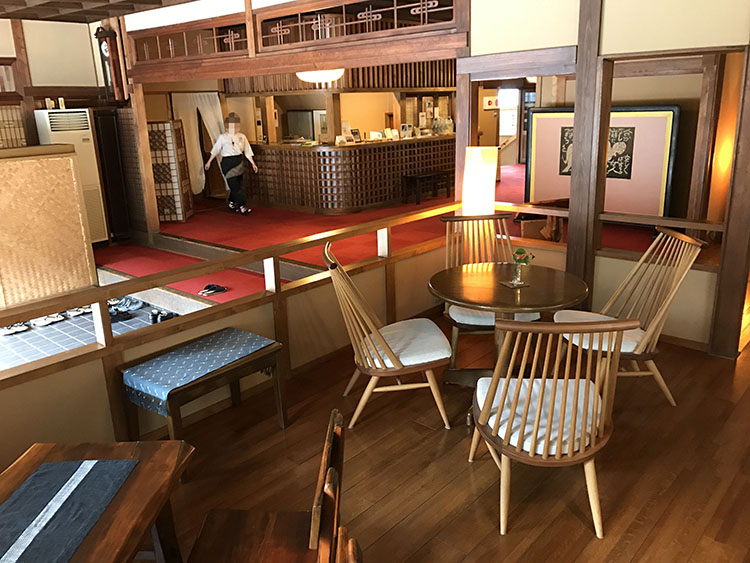
This is the entrance to the ryokan.
Lounge
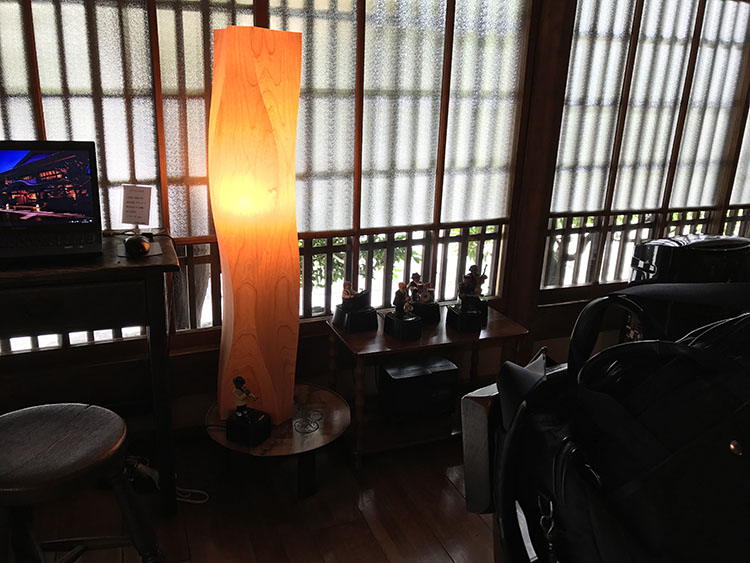
This is the relaxing lounge area of the ryokan.
Traditional Sweets
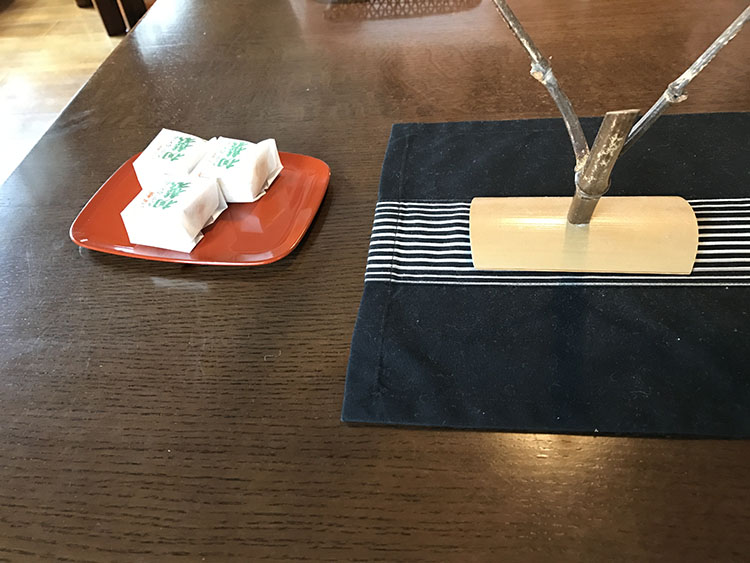
This was the tea sweet served upon arrival, a famous confection from Tsuyama called “Kirikasane.”
Matcha Tea
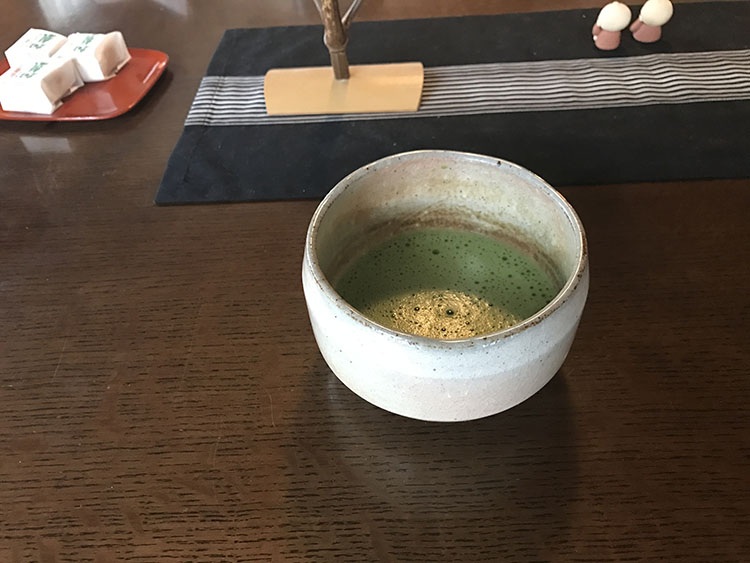
We were served matcha green tea.
Guest Room
Top
Japanese-style Room
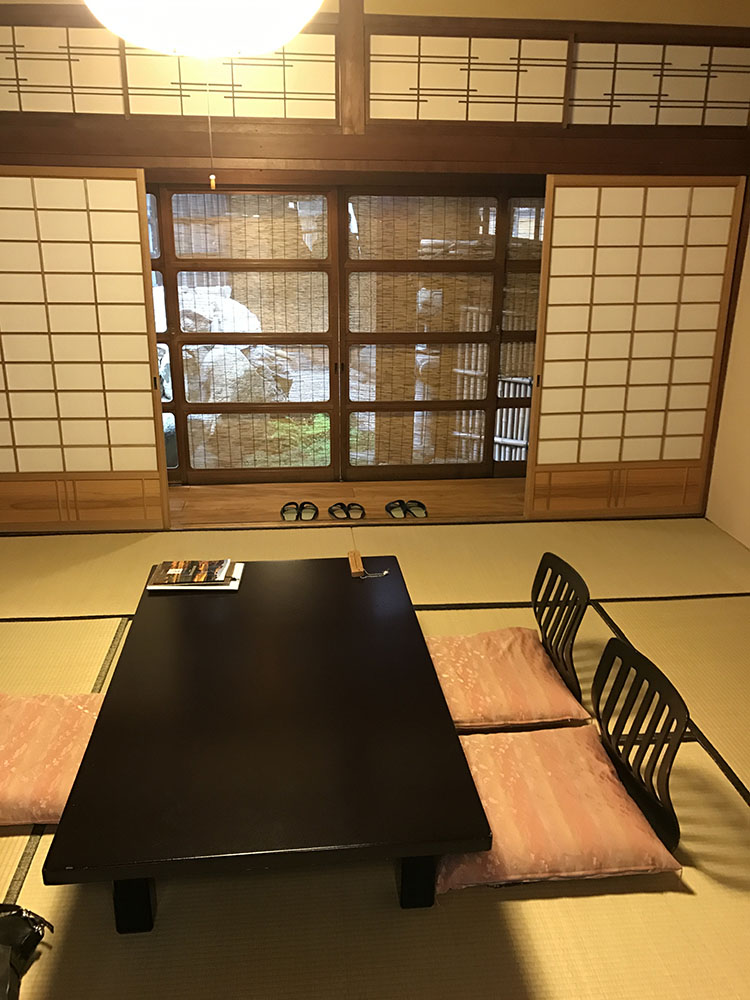
This is the inside of the guest room. It is designed in a traditional Japanese-style room layout.
Dinner
Top
“A Drop Before the Meal” and Appetizers
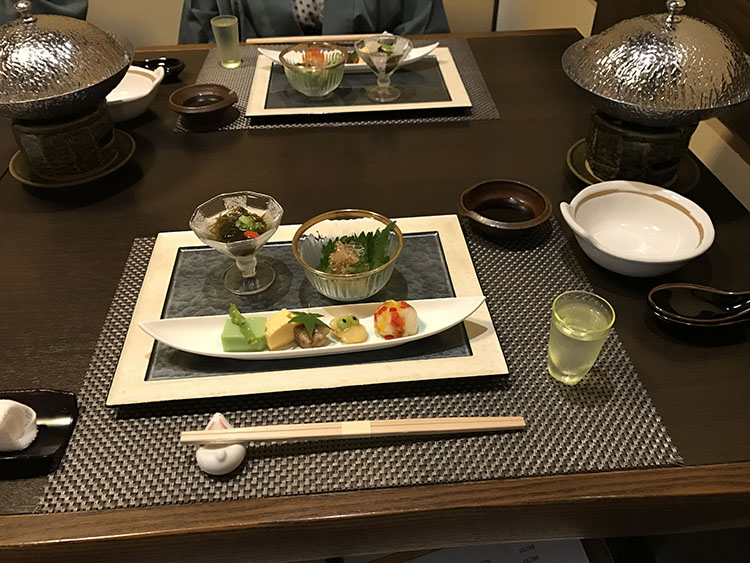
Instead of an aperitif, a small glass of hot spring water was served as “a drop before the meal.”
These were the appetizers for dinner. Every dish here was truly delicious.
Appetizers
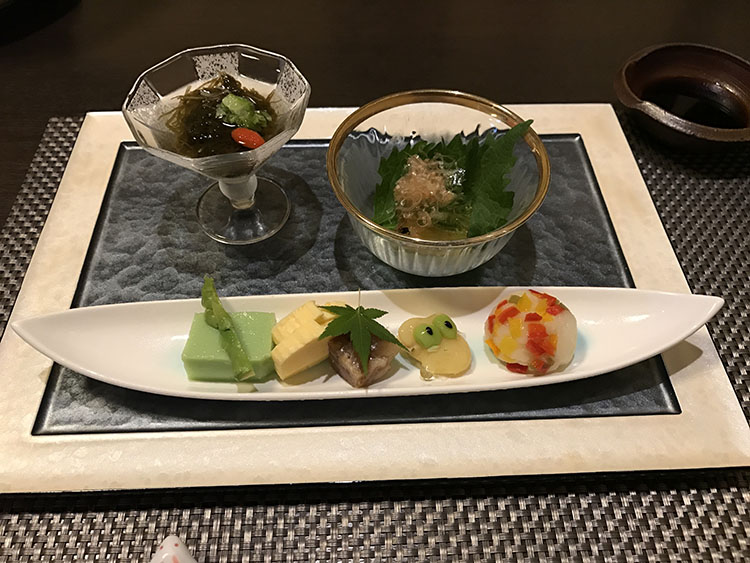
These were the appetizers.
The glass dish on the left may have been mozuku seaweed in vinegar. The five appetizers in the front were beautifully colorful.
Sparkling Wine
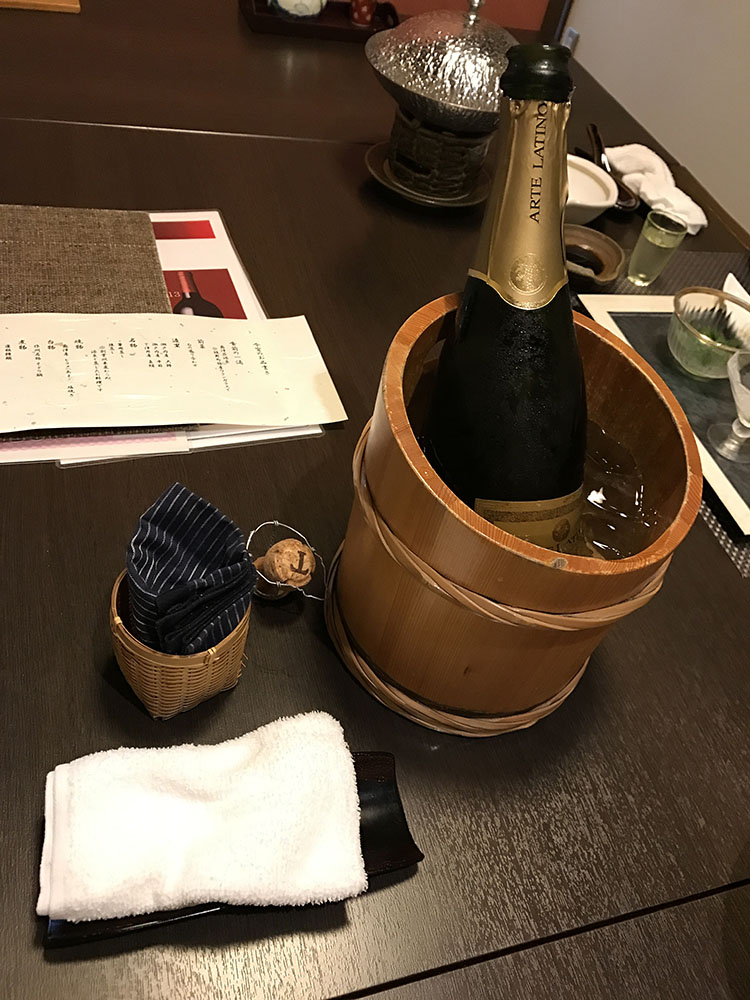
This was the sparkling wine we enjoyed.
The bottle was chilled in a wooden bucket filled with ice, which looked very elegant.
Dried Beef and Sashimi
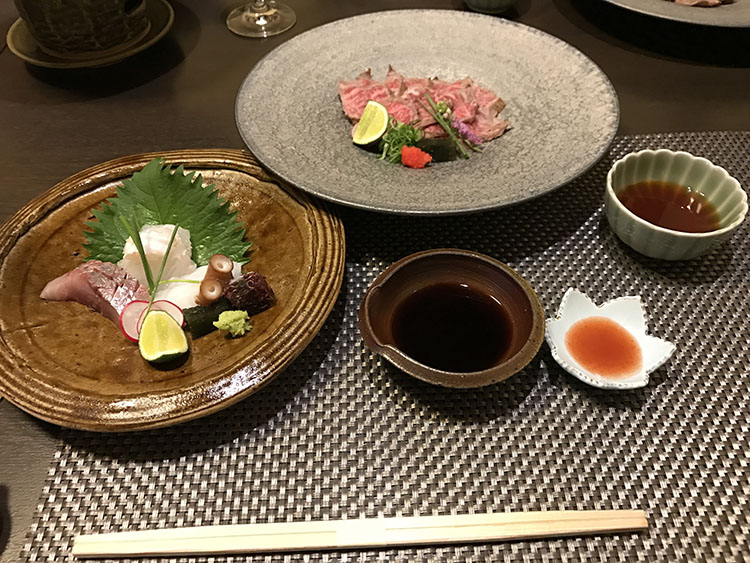
The meat dish was probably the local specialty called “hoshiniku” (dried beef). It looked almost like roast beef, and it is interesting how this style of meat dish has become a regional specialty.
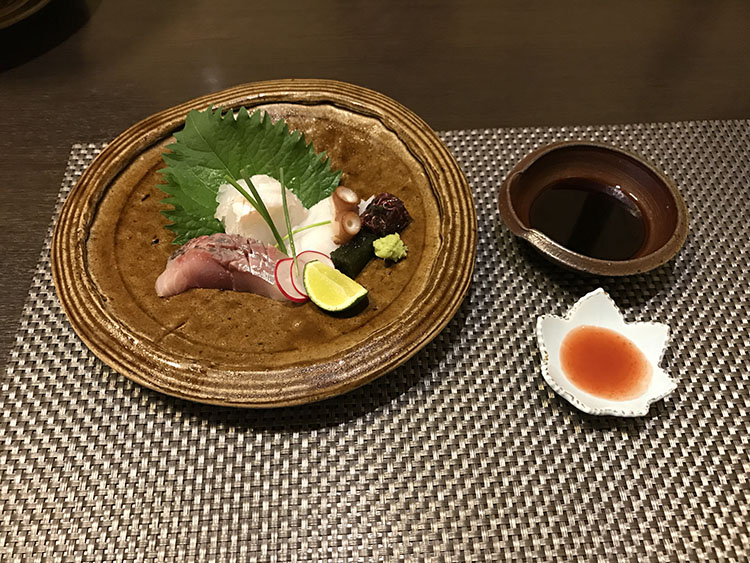
The sashimi included horse mackerel, flounder, and octopus.
Sozuri Hot Pot
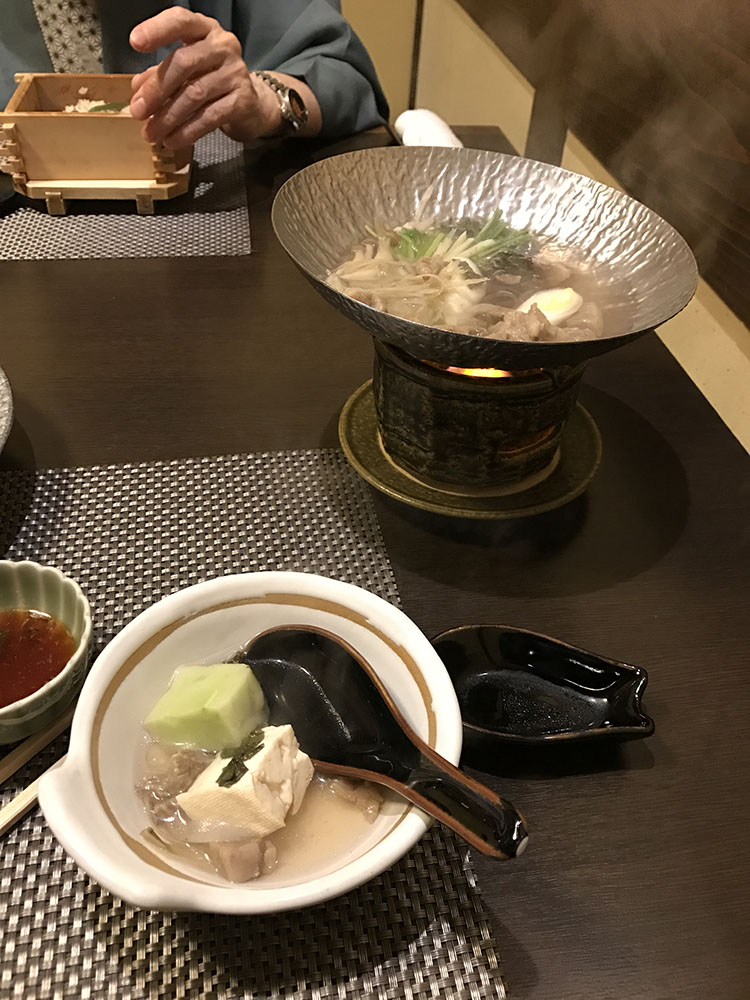
This is the local specialty called “Sozuri Nabe.”
It is a hot pot dish made with “sozuri meat,” which refers to meat scraped from around beef bones, cooked together with vegetables such as green onions, mushrooms, and daikon radish.
Steamed Conger Eel Using the Hot Spring Source
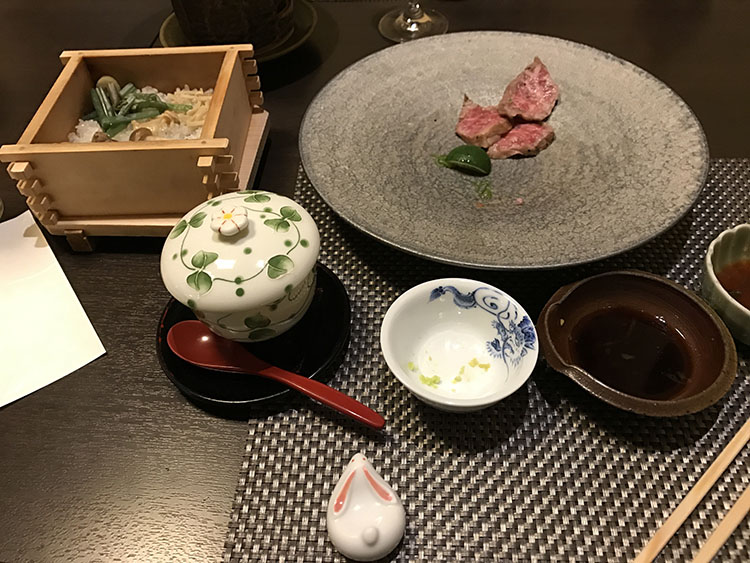
The square wooden box in the upper left contains conger eel steamed together with mushrooms using the natural hot spring source water. This is said to be one of the ryokan’s signature dishes since its founding.
Lotus Root Dumpling
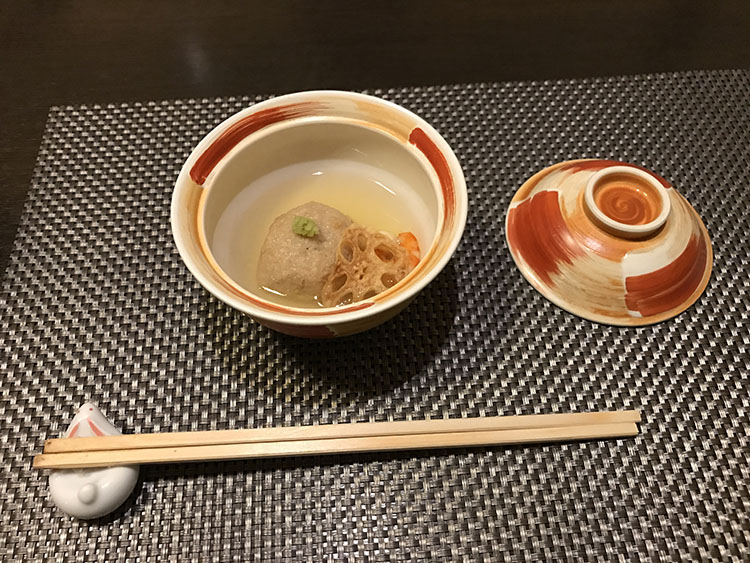
This is lotus root dumpling, a dish made by grating lotus root, shaping it into dumplings, and simmering them.
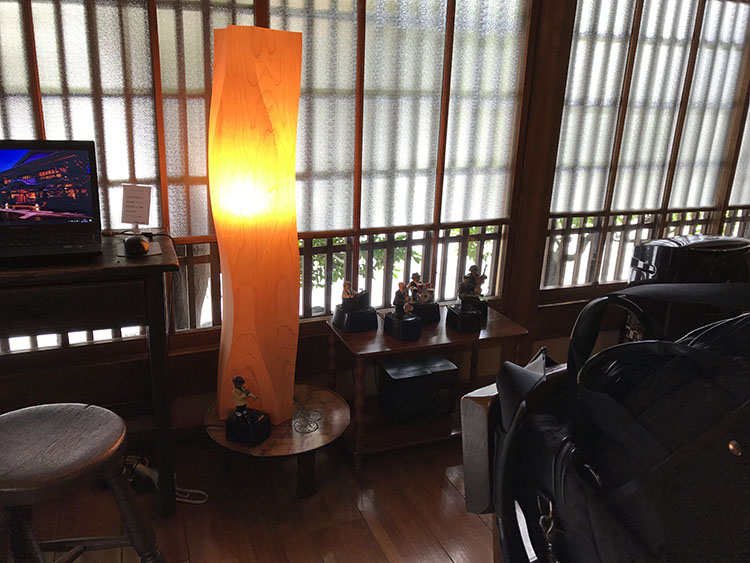
Lounge
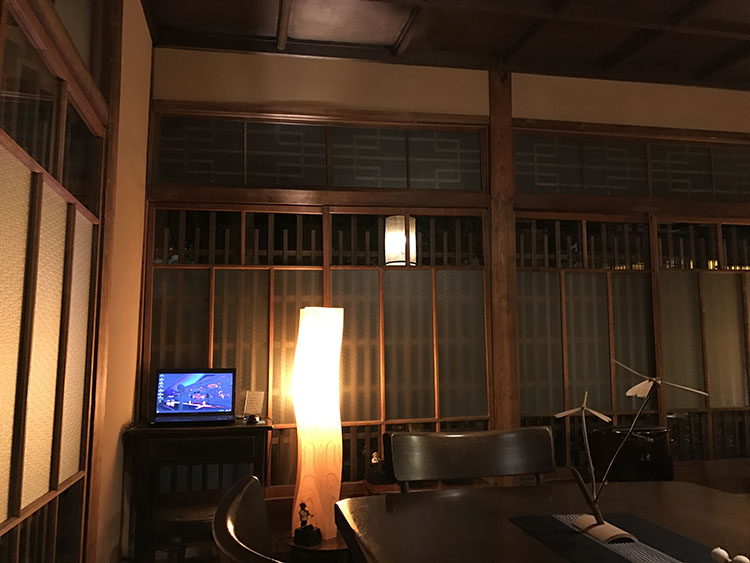
This is the lounge at Okutsuso where we relaxed after dinner.
Coffee was served, and we could spend a peaceful time listening to quiet music.
Night Tour
Top
Firefly Viewing Tour

That evening, we rode in this vehicle to join a tour to see fireflies. Unfortunately, it was pouring rain.
The fireflies were glowing in the grass, but because of the heavy rain, they were difficult to see clearly.
Hot Spring
Top
River Bath (1)
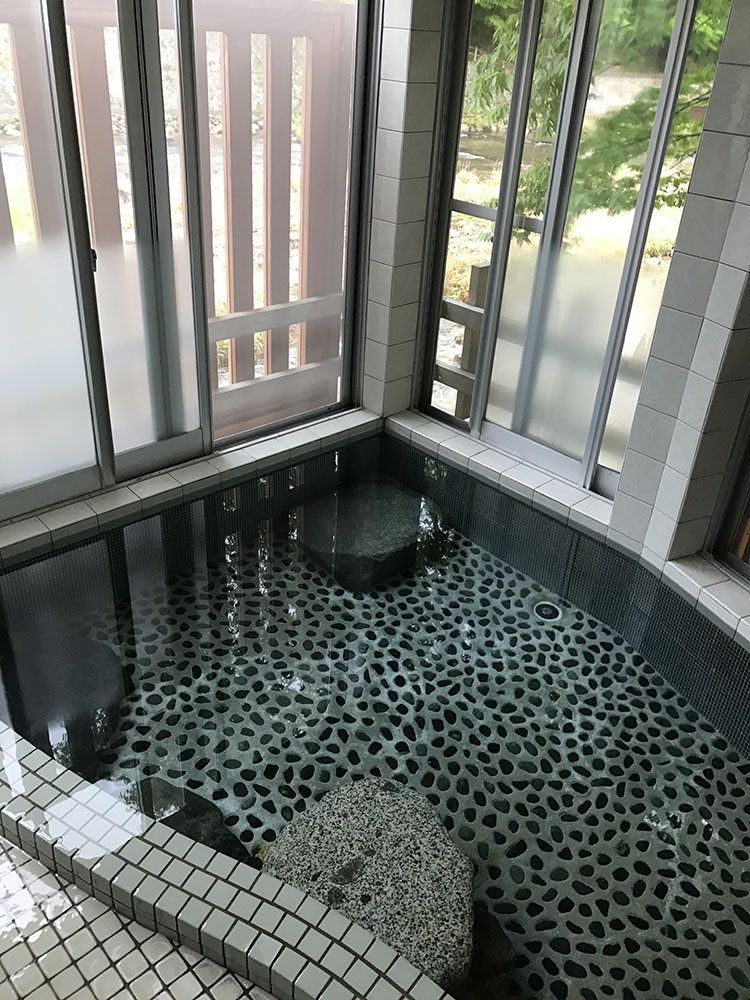
This bath has a tiled tub. You can enjoy the gentle sounds of the nearby Yoshii River and the greenery of the surrounding mountains while soaking in the water. The spring water is smooth and gentle.
Because this is a private bath, I was able to take photos.
River Bath (2)
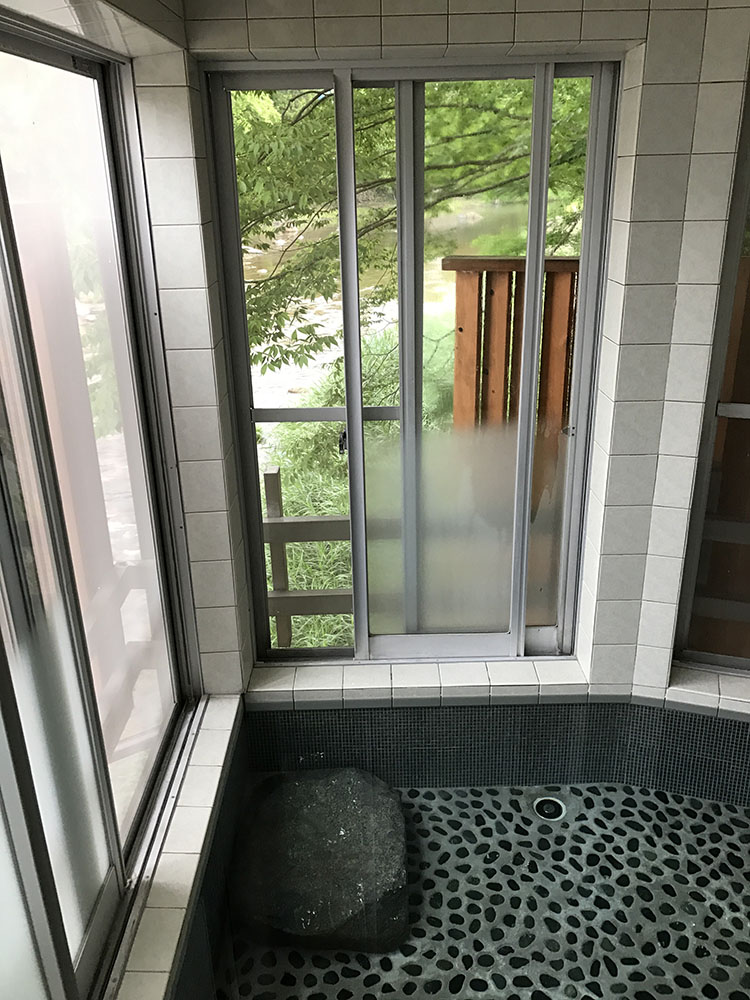
This is another view of the “River Bath.”
Although not shown in the photo, the ryokan also has a “Tachiyu” (standing bath) that uses natural rock depressions formed by the Yoshii River. It is deep enough to stand while bathing. (Photos were not possible as this is not a private bath.)
The depth at the deepest point is about 120 cm. The spring water quality is the same as the “River Bath,” smooth and soft.